Tankless Water Heater Installation Cost (2026 Prices)
Tankless water heater installation costs $1,400–$5,600 in 2026, averaging about $3,500. See prices by fuel type, what upgrades add, and when it pays back.
Which option fits your situation?
| If this describes you | Choose | Typical cost | Why |
|---|---|---|---|
| Replacing an existing tankless unit, same fuel | Straight swap | $1,000–$3,500 | Gas line, venting, and mounting already exist. This is the cheapest path. |
| Converting from a tank, gas available | Budget for line and venting | $3,000–$5,600 | The tank's vent cannot be reused and the gas line is usually too small. |
| Converting from a tank, electric only | Check the panel first | $1,400–$3,000 plus panel | A 27 kW unit can need 120 amps of dedicated load. Ask an electrician before buying. |
| Existing panel is 100 amps | Gas, or budget for an upgrade | +$1,500–$4,500 | The panel upgrade can exceed the installed cost of the heater itself. |
| Staying in the home under 5 years | A tank is usually the better buy | $1,100–$2,400 | Tankless pays back over a long hold, mostly through lifespan rather than energy savings. |
Typical cost ranges
| Item | Low | High | Notes |
|---|---|---|---|
| Electric tankless, whole house | $1,400 | $3,000 | No gas or venting work, but may need new circuits or a panel upgrade. |
| Gas tankless, whole house | $2,100 | $5,600 | Higher flow rate, but usually needs a larger gas line and new venting. |
| Point-of-use electric (one fixture) | $500 | $1,500 | Serves a single sink. Not a whole-house system. |
| Replace an existing tankless unit | $1,000 | $3,500 | Gas line, venting, and mounting are already in place, so labour is lower. |
| New venting | $250 | $1,200 | Condensing units use PVC; non-condensing need stainless. Roof runs cost more. |
| Permit and inspection | $50 | $500 | Required by most jurisdictions. Not a line item you should be asked to skip. |
| Recirculation pump (add-on) | $300 | $600 | Removes the cold-water burst before hot water arrives at distant taps. |
| Annual descaling | $150 | $250 | Ongoing, not part of installation. Skipping it shortens heat-exchanger life. |
Ranges are typical U.S. market estimates for 2026 and vary by region, home, and contractor. Always confirm a written quote before work begins.
What the quote often misses
These are the items that most often sit outside the headline price. They are not always needed, but when they are required they are what turns a mid-range quote into a top-of-range one.
| Item | Low | High | Why it is often missed |
|---|---|---|---|
| Gas line upsizing | $300 | $2,000 | Usually not in the advertised price. Quoted separately once the plumber measures your existing line, and it is the most common surprise on the final invoice. |
| Electrical panel upgrade | $1,500 | $4,500 | Electric tankless units draw 100–150 amps. On an older 100-amp service this is a separate trade and a separate invoice. |
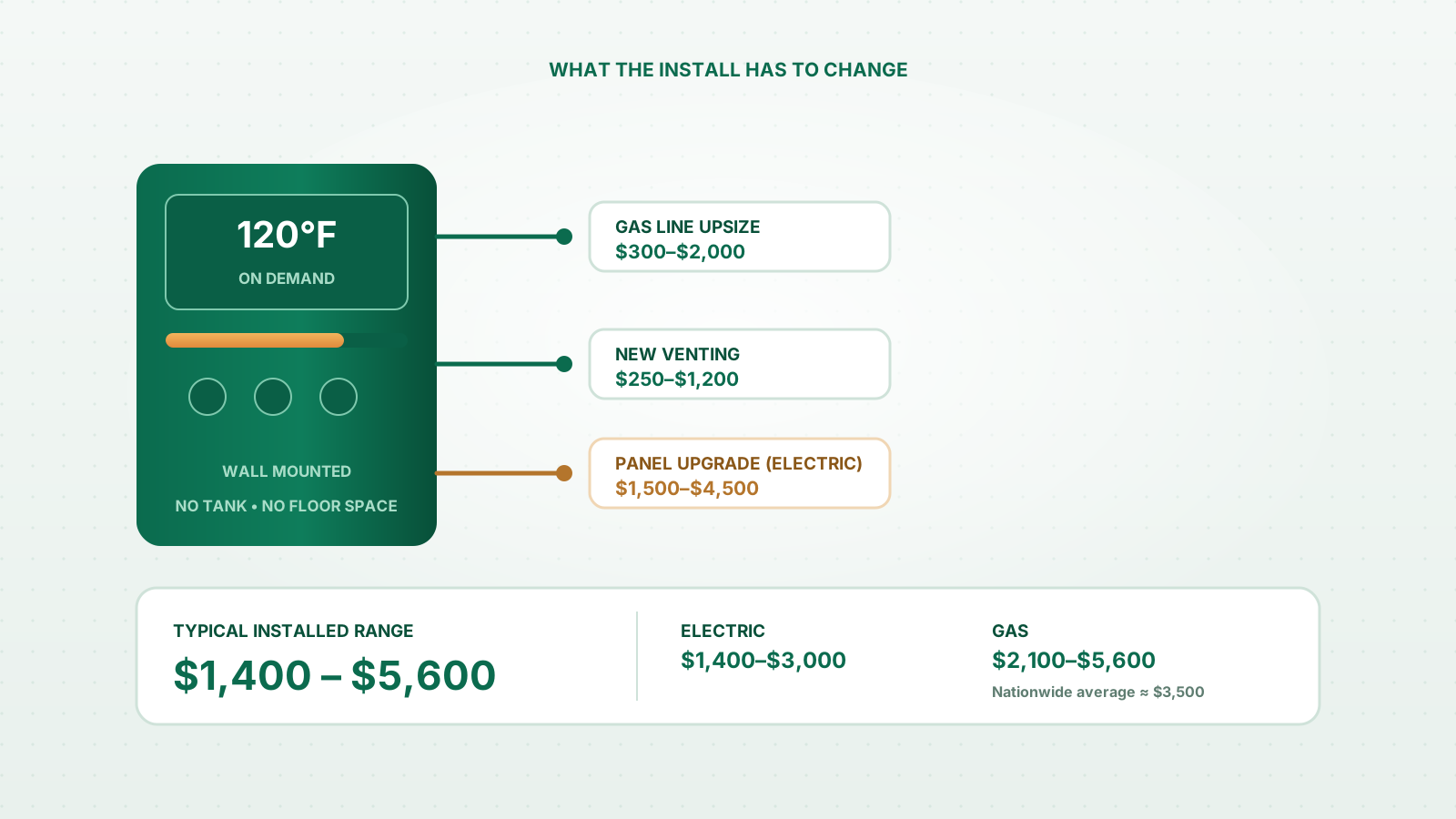
Tankless water heater installation costs $1,400–$5,600 in 2026, with a national average near $3,500. Electric units sit at the lower end and gas units at the upper end, because gas usually needs a larger supply line and new venting. The unit itself is often the smaller half of the bill.
That surprises most homeowners, so it is worth being precise about where the money goes. Converting from a tank to tankless is not a swap — it is a small construction project. The old vent cannot be reused, the gas line is frequently too small for the unit’s demand, and an electric model may need a panel that can deliver well over 100 amps.
Independent guide. We may earn a commission from links on this page.
Tankless water heater prices, 2026
| System | Installed cost | What it includes |
|---|---|---|
| Electric tankless, whole house | $1,400–$3,000 | Unit, circuits, labor. No gas or venting work |
| Gas tankless, whole house | $2,100–$5,600 | Unit, larger gas line, new venting, labor |
| Point-of-use electric | $500–$1,500 | One fixture only — not a whole-house system |
| Replacing an existing tankless | $1,000–$3,500 | Straight swap; infrastructure already in place |
| Gas line upsizing | $300–$2,000 | Often required; frequently quoted separately |
| New venting | $250–$1,200 | PVC for condensing, stainless for non-condensing |
| Electrical panel upgrade | $1,500–$4,500 | Only for electric units on older service |
| Permit and inspection | $50–$500 | Required in most areas |
| Recirculation pump | $300–$600 | Optional. Removes the cold-water burst |
| Annual descaling | $150–$250 | Ongoing maintenance, not installation |
The three rows that decide your total are the gas line, the venting, and — for electric — the panel. A quote that omits any of them is not a comparable quote.
What actually drives the price
Two quotes for the same unit can differ by thousands of dollars because homes differ, not because one plumber is gouging. These are the variables:
Fuel type. Gas units deliver higher flow rates but need venting and usually a bigger gas line. Electric units skip both, but draw enough current that a panel upgrade is common. This single choice swings the total by $500–$2,000 before anything else is considered.
Flow rate and sizing. Whole-house tankless is sized in gallons per minute at your incoming water temperature, not by tank volume. A household needing 6–9 GPM needs a bigger, pricier unit than one needing 4 GPM. Sizing up a tier adds roughly $300–$700 in equipment cost.
Retrofit versus replacement. A new-construction rough-in is cheap because the venting and gas line are planned from the start. A retrofit into a finished basement means opening walls and re-routing. That is where labor doubles.
Water hardness. Hard water scales the heat exchanger faster. Many installs in hard-water areas add a softener or scale filter at the same time, which is a genuine cost but a real one to plan for.
Cost by region
Labor rates vary more than equipment prices, and equipment is roughly flat nationwide. Applying the regional multipliers to the $3,500 average:
| Region | Typical cost | Versus average |
|---|---|---|
| Northeast | ~$4,020 | +15% |
| West Coast | ~$4,200 | +20% |
| Mountain / Southwest | ~$3,680 | +5% |
| Midwest | ~$3,330 | −5% |
| South | ~$3,150 | −10% |
A high-cost metro can push a gas conversion past $6,000. If you are comparing quotes across state lines, compare the labor portion, not the equipment.
Gas vs. electric: which costs more overall
| Gas tankless | Electric tankless | |
|---|---|---|
| Installed cost | $2,100–$5,600 | $1,400–$3,000 |
| Additional upgrades | Gas line, venting | Panel and circuits |
| Flow rate | Higher, handles whole house | Limited when several fixtures run at once |
| Cold-climate performance | Strong | Units for cold incoming water get larger and cost more |
| Ongoing cost | Annual descaling | Annual descaling |
Electric wins on installation price. Gas wins on performance where incoming water is cold or several showers run at once. The ongoing saving is similar for both, because both avoid the standby loss of a tank.
Change orders that show up after the work starts
These are the items that turn a quote into a bigger invoice. Ask about each one before you approve anything.
Expansion tank — $80–$300. Required by code in closed-loop plumbing systems, which covers most homes built or updated since the mid-1990s. A new install means a new one.
Drain pan and drain line — $200–$500. Required anywhere a leak could damage finished space. Attic and second-floor installs almost always need it.
Gas line upsize — $400–$1,500. The most common surprise on a tankless conversion, because the existing line was sized for a 40,000 BTU tank, not a 200,000 BTU tankless unit.
Vent replacement — $250–$900. The tank’s atmospheric vent does not work for tankless. Cutting new penetrations through a roof or sidewall adds two to three hours of labor.
Electrical panel upgrade — $1,500–$4,500. A 27 kW electric unit can call for 120 amps of dedicated load. On a 100-amp service, that means a service upgrade.
Permit and inspection — $50–$400. Skipping it can void insurance coverage on water damage if the unit later fails. It should be in the quote, in writing.
Tankless water heater cost and installation: the two numbers
Shoppers shopping this category usually want two figures, and they are very different: what the unit costs, and what the finished installation costs. Mixing them up is the most common reason a budget goes wrong.
| Unit only | Installed | |
|---|---|---|
| Electric, whole house | $500–$1,500 | $1,400–$3,000 |
| Gas, whole house | $1,000–$3,000 | $2,100–$5,600 |
| Point-of-use electric | $200–$500 | $500–$1,500 |
So a gas unit advertised at $1,200 does not mean a $1,200 project. Once the gas line is upsized and new venting is run, the installed figure is typically two to three times the sticker price. When you compare tankless water heater cost and installation as a single budget line, use the installed column — that is the number the invoice will land near.
Is tankless worth the extra cost?
Run it as a comparison against a tank, because the honest answer depends on how long you keep the house.
| Tank | Tankless gas | |
|---|---|---|
| Installed cost | $1,100–$2,400 | $3,000–$5,600 |
| Lifespan | 10–12 years | 15–20 years |
| Standby energy loss | Yes, keeps 40–50 gal hot | None |
| Hot water supply | Limited by tank size | Continuous |
| Annual maintenance | Minimal | Descaling, $150–$250 |
Tankless pays back through lifespan more than through energy savings. You avoid one full replacement inside a typical 20-year hold, and the unit occupies no floor space. Where the install needs a large gas line or a panel upgrade, payback stretches further out and a tank is the better financial choice.
If you are staying under five years, a tank is usually the right call. If you are staying long-term and the install does not require major upgrades, tankless is the stronger buy.
Getting comparable quotes
Ask every contractor the same four questions, and put the answers in writing:
- What flow rate does the proposed unit deliver at my incoming water temperature? A unit’s headline rating is measured under favourable conditions.
- Is the gas line upsizing included, or quoted separately? This is the single largest source of invoice surprises.
- Is the permit included, and who pulls it? If the answer is “you can skip it,” that is a red flag.
- Is removal and disposal of the old unit included? It is a small cost but a common omission.
A quote that answers all four is worth more than one that is $500 cheaper and vague.
Recommended equipment
How we arrived at these figures
Figures are 2026 U.S. national cost-guide ranges for installed systems, cross-checked across multiple contractor cost references.
Installation pricing is driven by what the home must change to support a tankless unit, not by house size on its own. That is why the page prices the upgrades separately before it compares the total.
- These are ranges, not quotes. Real prices vary by region, season, property condition and access. Always get a written quote before committing to work.
- We are independent.
Some links on this page are affiliate links, marked
rel="sponsored". They do not change what we recommend, and we recommend against buying in some situations. - Where we are unsure, we say so. If a figure rests on a small sample or a single source, we say that rather than rounding it into false precision.
Frequently asked questions
How much does tankless water heater installation cost?
Most whole-house installations cost $1,400–$5,600 in 2026, with a national average near $3,500. Electric units typically land at $1,400–$3,000 because there is no gas or venting work. Gas units run $2,100–$5,600 because they usually need a larger gas line and new venting.
How can I estimate my own tankless water heater installation cost?
Start with the installed range for your fuel type — $1,400–$3,000 for electric, $2,100–$5,600 for gas — then adjust for the four variables that move it: whether you are converting from a tank or replacing an existing tankless unit, whether the gas line needs upsizing, whether the old vent can be reused, and your region's labor rate. Any calculator that asks only for house size will undershoot, because size is not what drives tankless pricing.
Why is tankless installation so much more than the unit price?
Because installation, not the equipment, is most of the bill. A tankless unit draws far more gas or current at once than a tank, so the supply line is often too small, the old vent cannot be reused, and electric models may need a panel upgrade. Each of those is a separate cost that a tank swap would not have.
Does a tankless water heater need a bigger gas line?
Often yes. Whole-house gas tankless units draw 150,000–200,000 BTU, against roughly 40,000 BTU for a tank heater. Many homes have a 1/2-inch line that cannot deliver that, so it is upsized to 3/4 or 1 inch. Expect $300–$2,000 depending on the run length and how much is inside finished walls.
Is tankless cheaper to run than a tank?
Usually yes, because there is no standby loss from keeping 40–50 gallons hot around the clock. The saving is real but modest for most households. The bigger financial argument for tankless is lifespan: gas tankless units commonly last 20 years against 10–12 for a tank.
How long does a tankless installation take?
A straightforward replacement of an existing tankless unit is usually four to eight hours. Converting from a tank to tankless, or adding a gas line or new venting, typically takes one to two days and sometimes more if the vent has to be run through a roof.
Can I install a tankless water heater myself?
Not realistically for a whole-house unit. Gas line sizing, venting, and high-amperage electrical work are code-critical and are usually required to be done by licensed trades, often with a permit. A DIY installation can also void the manufacturer warranty. DIY is only realistic for a small point-of-use electric unit on an existing dedicated circuit.